Background
Recently, many artificial intelligence (AI)-powered protein–ligand docking and scoring methods have
been developed,
demonstrating impressive speed and accuracy. Among a series of docking methods below,
CarsiDock achieved the highest enrichment factors (EFs) on the RandomDecoy set, but its efficiency
is limited, as docking a ligand to its target takes 1.726 s.
Although KarmaDock is less effective than CarsiDock in enriching ligands,
it completes a single docking experiment in just 0.017 s, allowing it to process a million molecules
in merely 4.7 h on a single Tesla V100.
It is typically necessary to balance speed and accuracy when choose
docking tools for practical Virtual Screening (VS) projects. KarmaDock stands out for its speed,
whereas CarsiDock offers exceptional accuracy. To harness the strengths of both tools,
we proposed a hierarchical strategy: first, KarmaDock is utilized for initial screening of the
entire compound library; subsequently,
the top 100,000 molecules are ranked using CarsiDock.
This methodology has proven successful in VS across eight targets within a library of over
7 million compounds,
highlighting its potential in real-world drug screening.
You can access the Hierarchical Virtual Screening (HierarchicalVS) module on this website to use this feature.
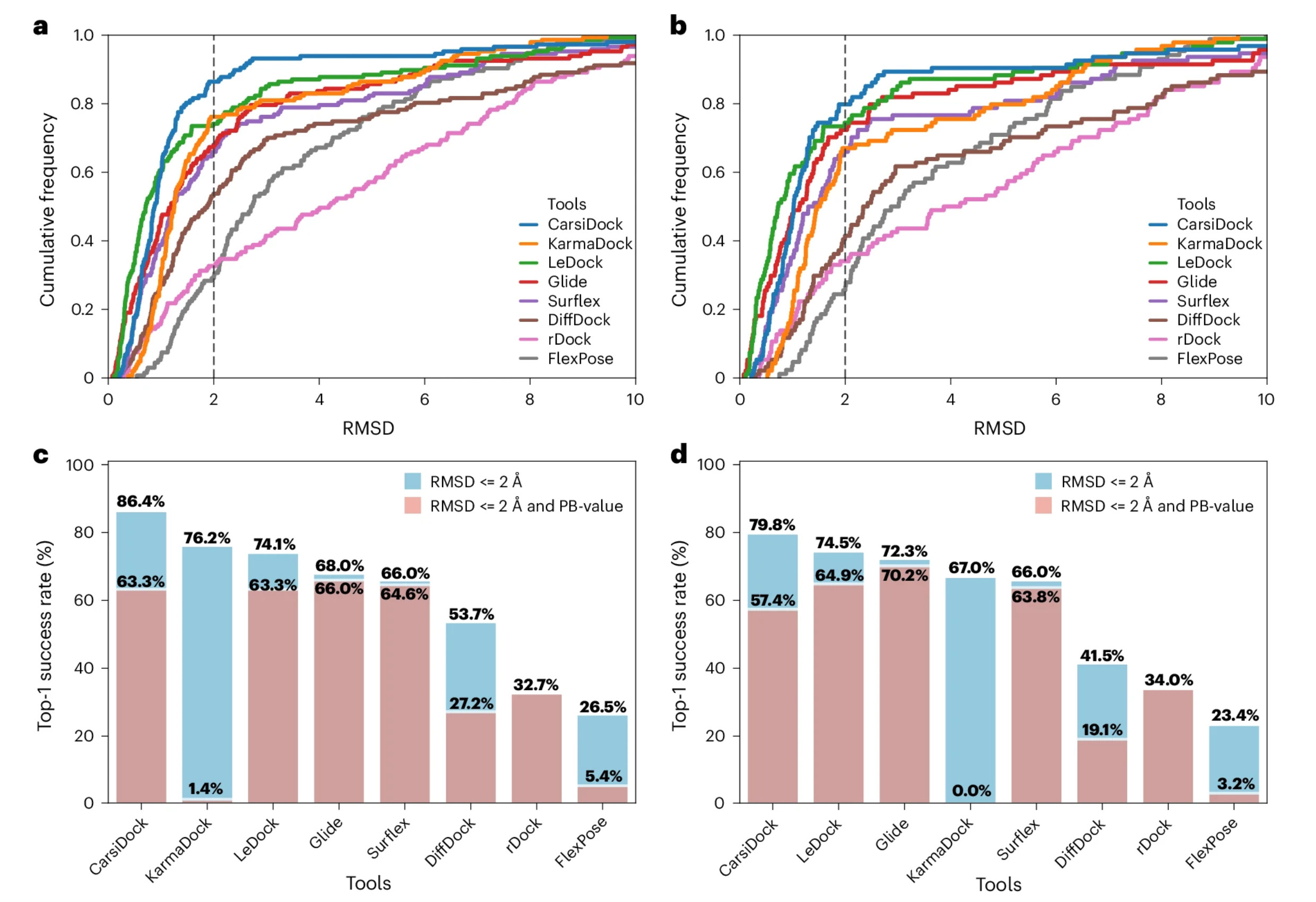
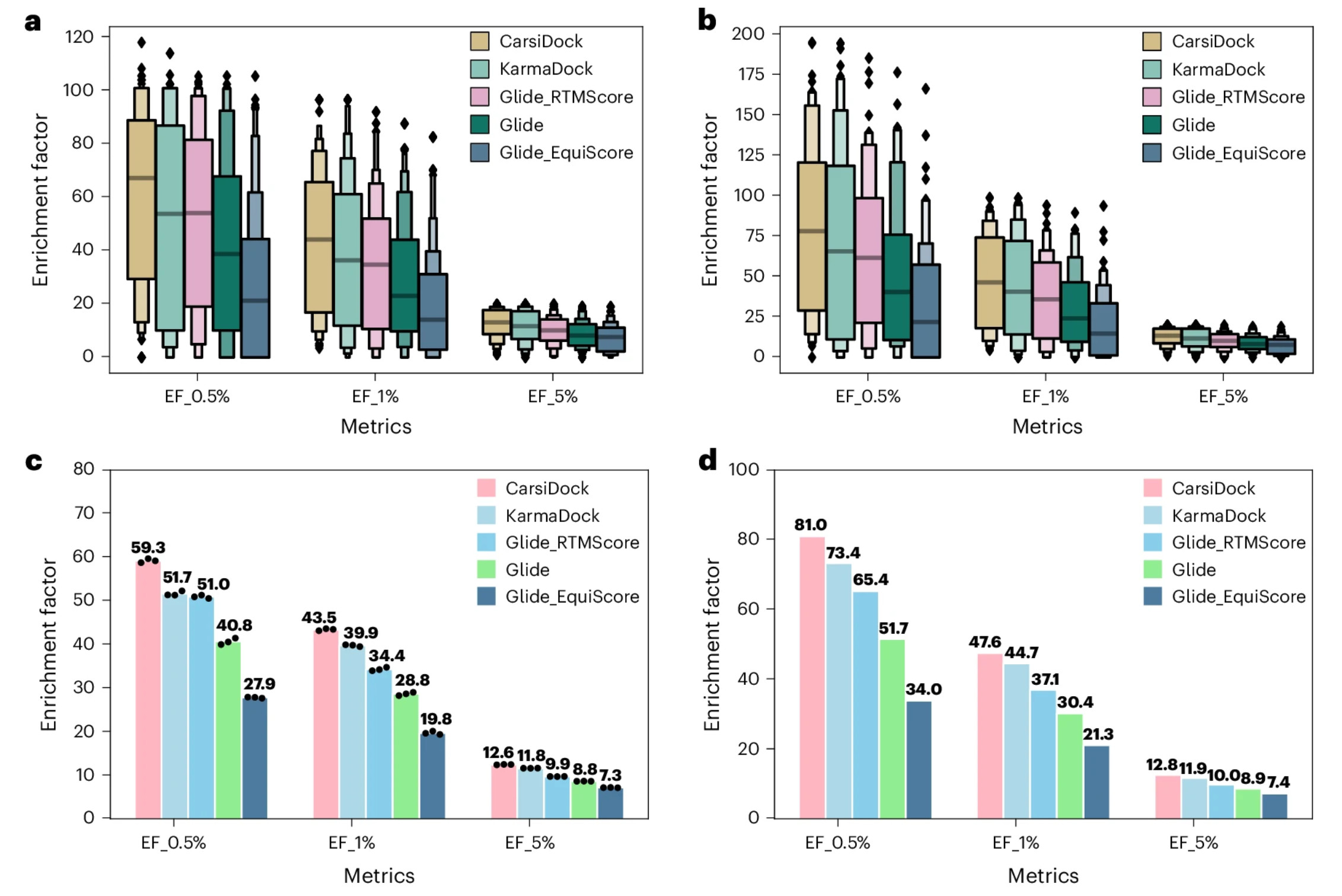
As shown in the figure below, regardless of whether the active-to-decoy ratio is 1:100 or 1:300, the overall rankings for the EFs on the RandomDecoy set remain consistent: CarsiDock, KarmaDock, Glide combined with RTMScore, Glide and Glide combined with EquiScore. In terms of the average values of the EF_0.5%, EF_%1 and EF_%5 metrics on the RandomDecoy set (1:100) and the RandomDecoy set (1:300), CarsiDock achieved the highest performance, with EFs of 59.3, 43.5 and 12.6, and 81.0, 47.6 and 12.8, respectively, followed by KarmaDock. Rescoring Glide-based docked complexes with RTMScore also led to an improvement in the average values of these three metrics from 40.8, 28.8, 8.8 to 51.0, 34.4, 9.9 and 51.7, 30.4, 8.9 to 65.4, 37.1, 10.0 on the RandomDecoy set (1:100) and the RandomDecoy set (1:300), respectively. These results highlight the potential of DL-based docking and scoring tools in real-world drug screening processes. You can perform precise molecular docking and scoring with CarsiDock and RTMScore at hpVS module of this website.
CASE 1
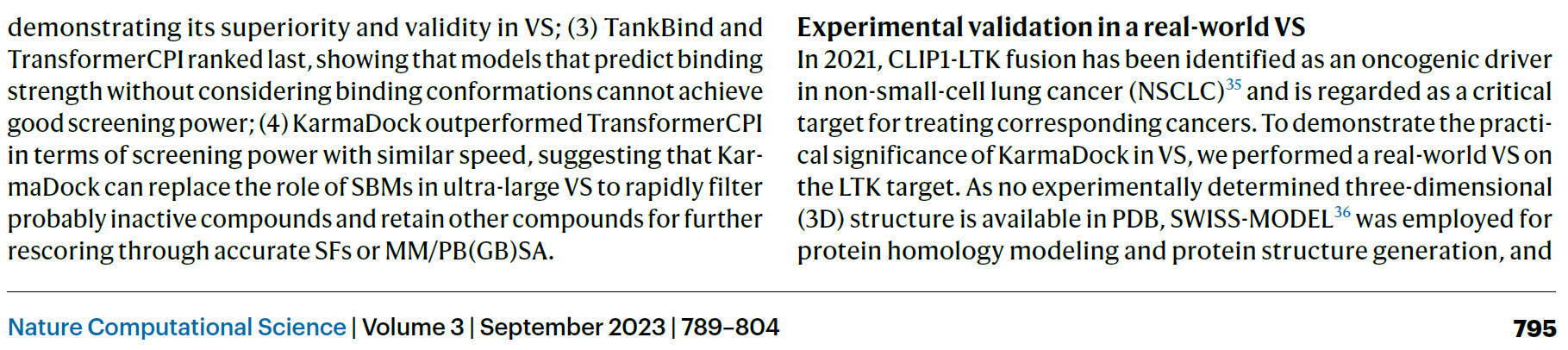
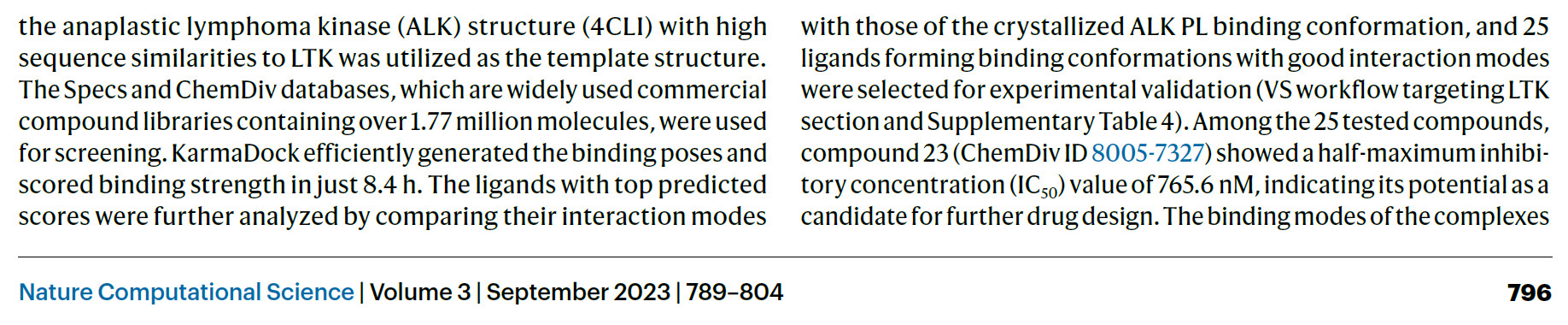
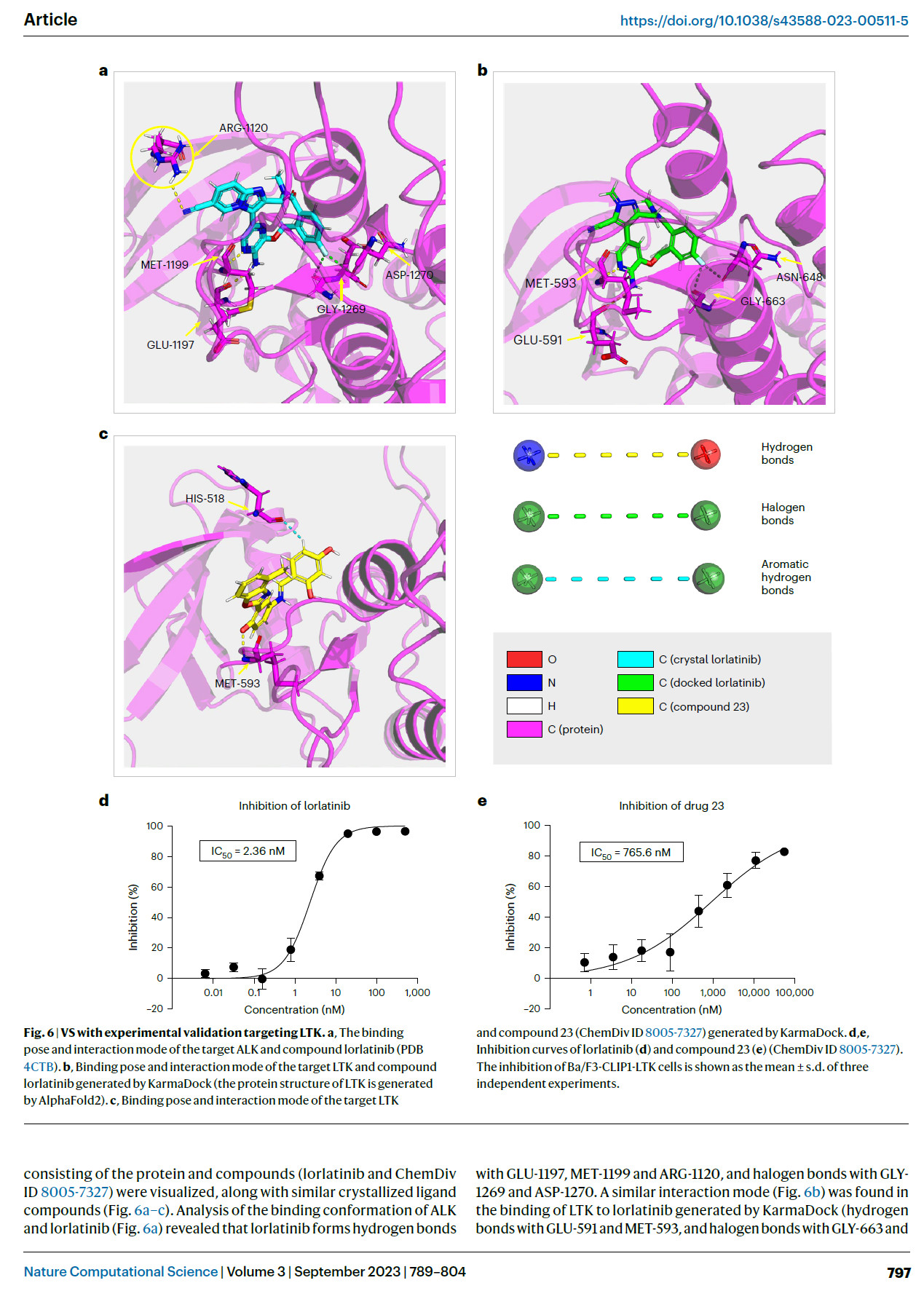
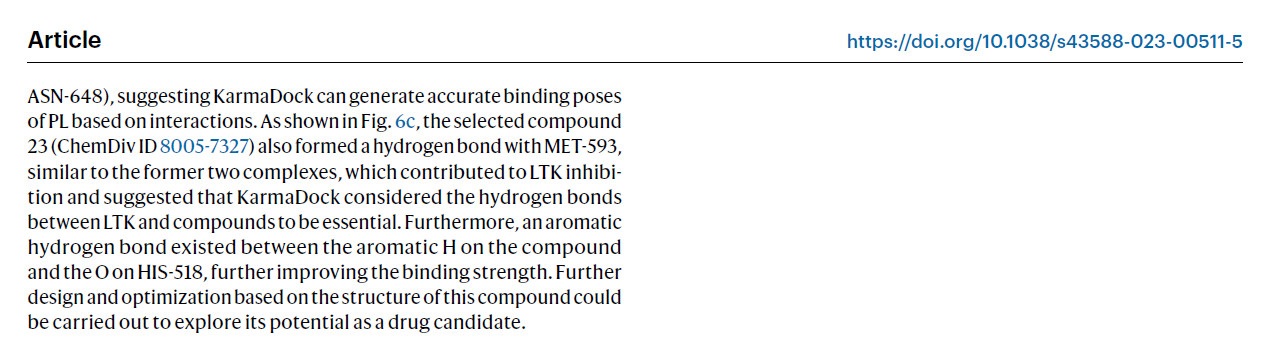
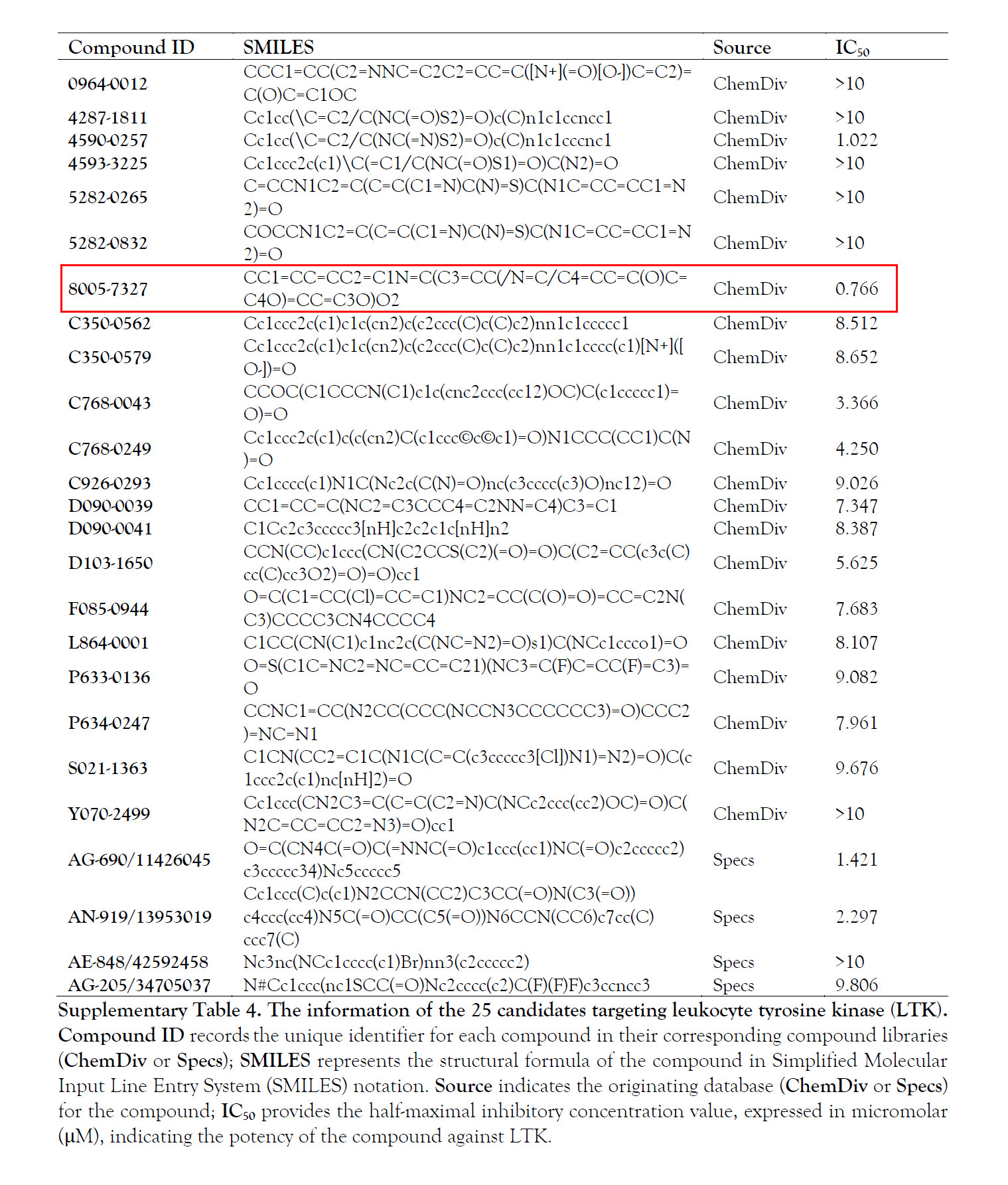
In this example, Dr. Zhang et al. successfully applied KarmaDock to discovery an active
leukocyte tyrosine kinase (LTK) inhibitor (ID 8005-7327, IC50=766nM) from the ChemDiv
database.
* Notably, the heVS module of this platform incorporates KarmaDock for
structure-based virtual screening, utilizing a pre-clustered subset of the ChemDiv database
containing approximately 300,000 diverse compounds.
Here, what you need to do is just uploading your target protein and its co-ligand, and then
waiting for about 55 miniutes to receive the screening results.
CASE 2
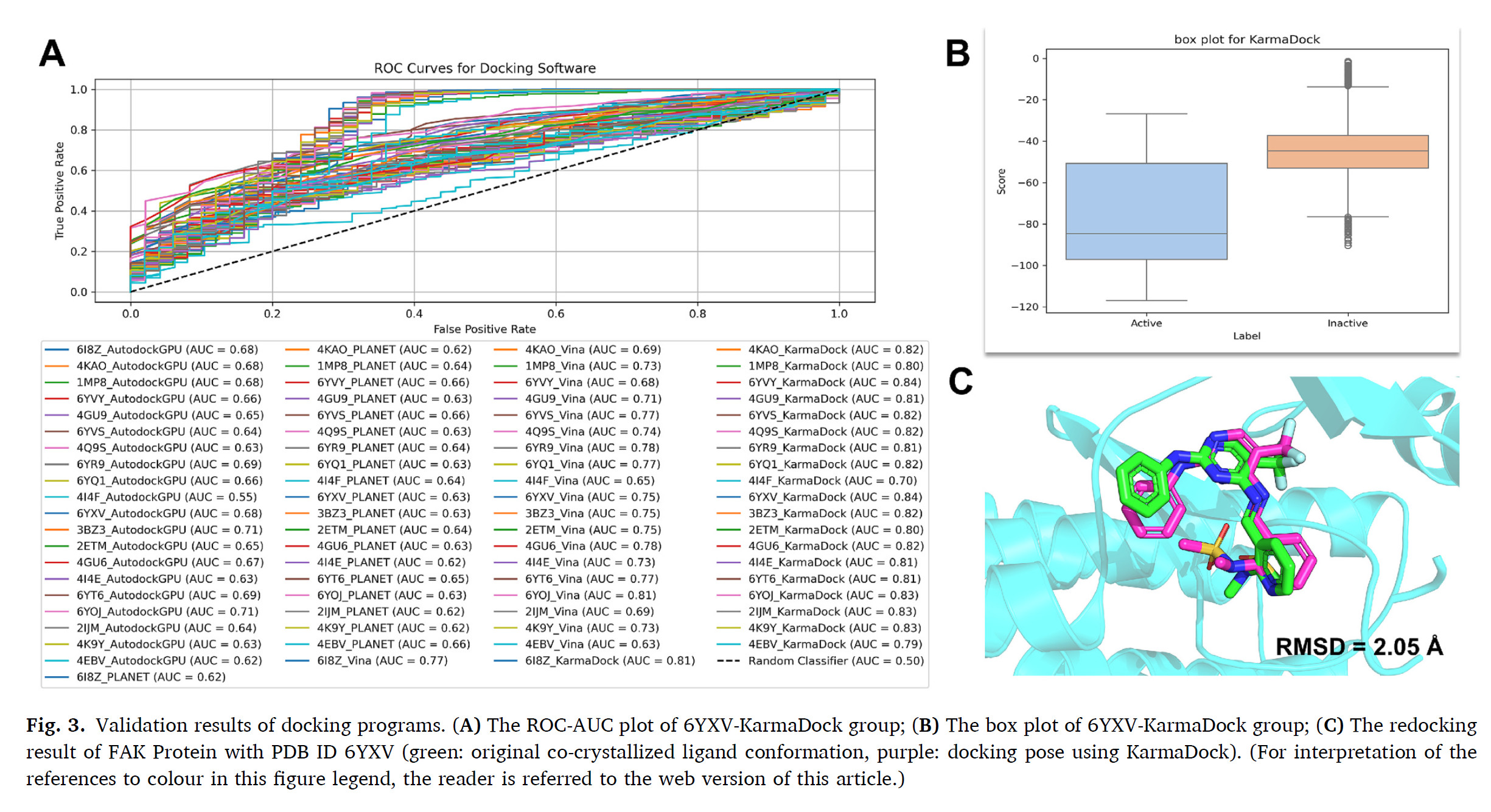
To identify the most effective docking program for virtual screening, this study evaluated 20 FAK
protein structures using five distinct docking software tools. Among these, the 6YXV-KarmaDock
pair achieved the highest ROC-AUC value of 0.84,
demonstrating its ability to distinguish between active and inactive ligands.
Moreover, as shown in Fig. 3B, KarmaDock can effectively discriminate between active and inactive
FAK ligands.
To further evaluate the accuracy and efficacy of the KarmaDock docking program,
a redocking analysis using KarmaDock on the 6YXV protein and its co-crystallized ligand was
performed.
The comparison of the conformations before and after docking, as illustrated in the figure below,
indicates that the molecular cores largely overlap.
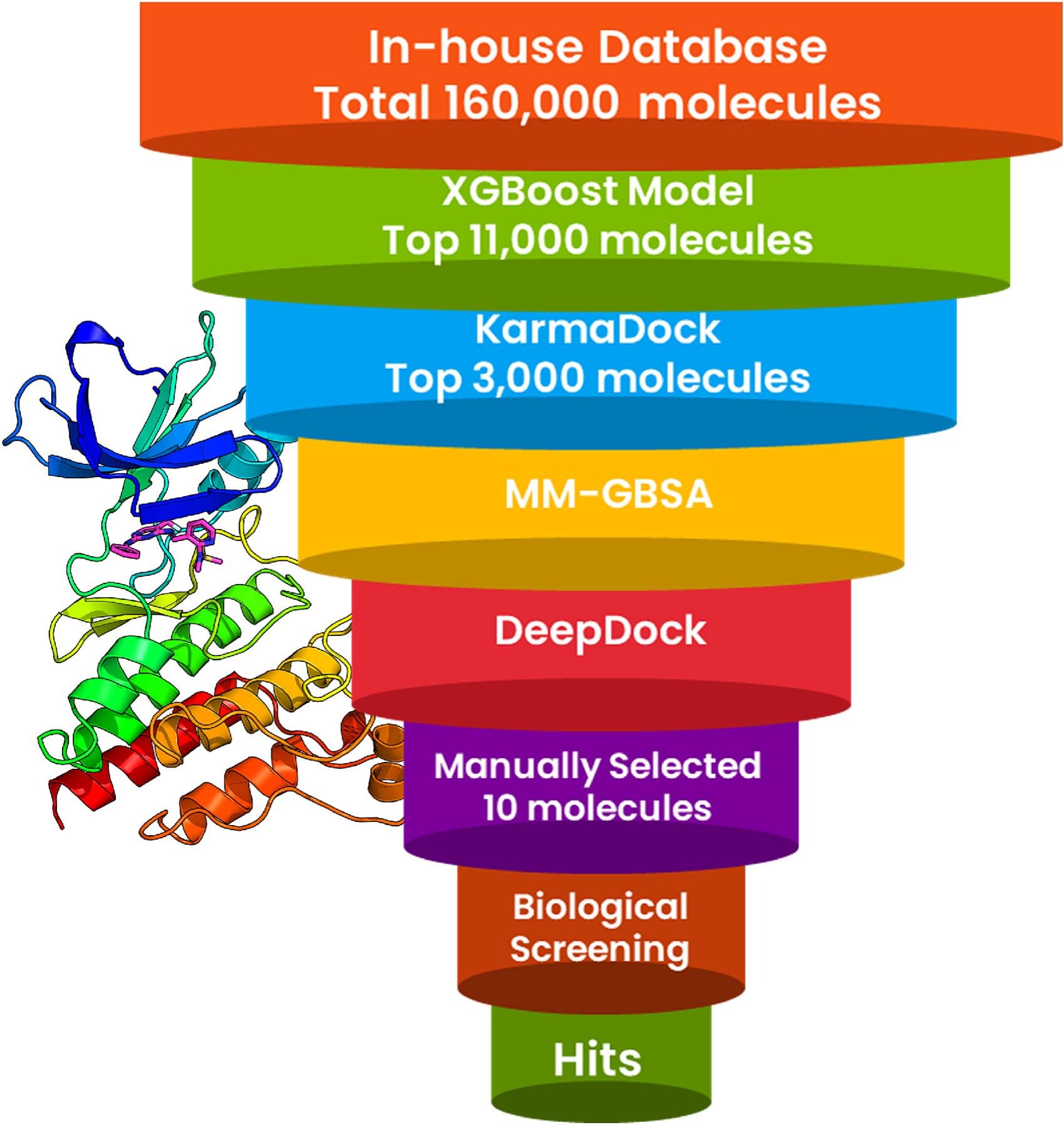
This work developed a unique hybrid virtual screening workflow specifically tailored to identify FAK
inhibitors. This comprehensive screening process integrates several advanced techniques, including
machine learning, KarmaDock for molecular docking, MM-GBSA for binding energy calculations,
and DeepDock for assessing atomic interactions.
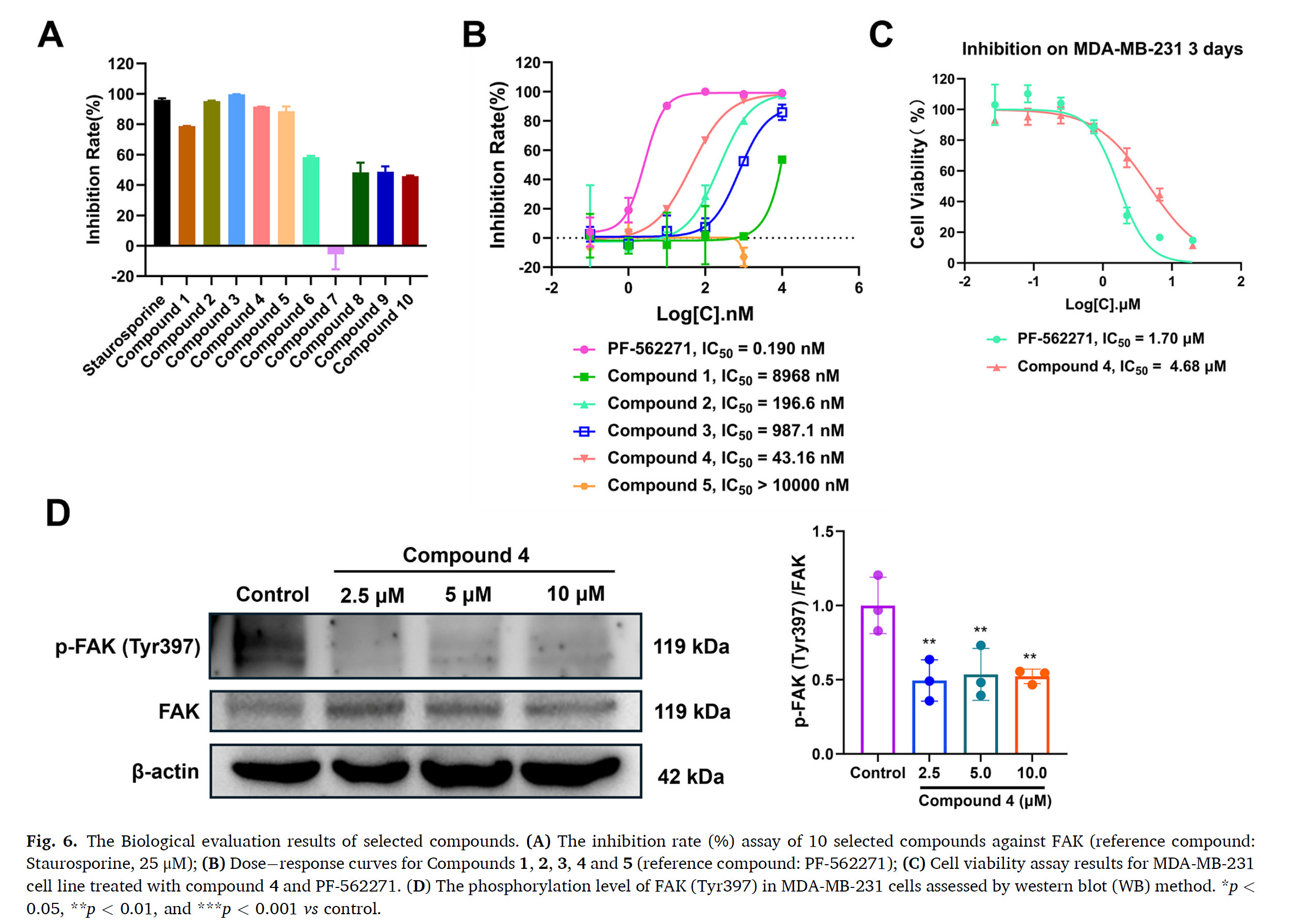
Using this protocol, compound 4, a pyrimidin-4-amine derivative, was identified as a promising
candidate. Compound 4 demonstrated potent inhibitory activity against FAK in vitro, with an
IC50 value of 43.16 nM, indicating its potential as a therapeutic agent.
* You can use KarmaDock for virtual screening in the heVS module of this website, which has built-in commercial compound libraries. Here, what you need to do is just uploading your compound library, target protein and its co-ligand, and then waiting to receive the screening results.
* The above text and images are excerpted from the source paper.